

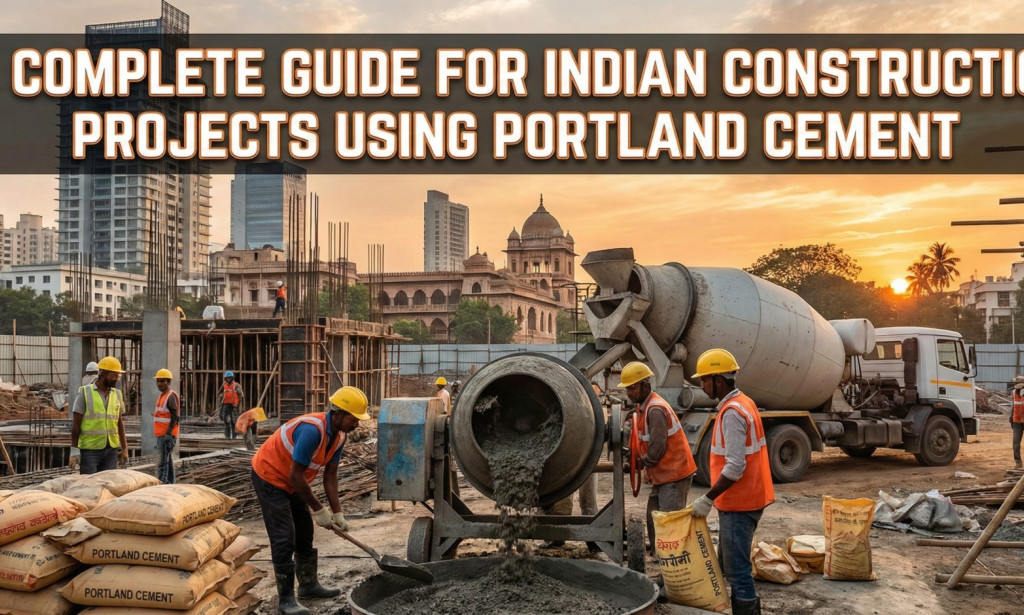
In terms of construction, India poses a challenge of its own. With its diverse climate conditions across the states, choosing the right cement for construction projects makes all the difference between a home that lasts decades and one that needs constant fixing. From individual homes to large commercial buildings, cement is the backbone that determines strength, durability, and long-term performance.
Among the various options available today, Portland cement remains a trusted material in Indian construction. When combined with modern cement formulas such as blended cements, it offers builders the balance of strength, workability, and sustainability needed for present-day demands. This guide explains how Portland-based cement works, where it is best used, and how to choose wisely for Indian conditions.
Understanding Portland Cement and Its Variants
This cement is made by finely grinding clinker with gypsum and other carefully controlled additives. It acts as a binding agent when mixed with water, sand, and aggregates, forming concrete or mortar that hardens over time.
In practice, it is rarely used alone today. It is commonly blended with other materials like fly ash or slag to improve performance and reduce carbon impact.
Common Types Used in India
|
Cement Type |
Key Feature |
Typical Applications |
|
OPC (Ordinary Portland Cement) |
High early strength |
Columns, beams, slabs |
|
PPC (Portland Pozzolana Cement) |
Long-term durability, lower permeability |
Residential construction, plastering |
|
PSC (Portland Slag Cement) |
High resistance to chemicals |
Coastal and industrial areas |
Why PPC Is Widely Used in Indian Projects
Portland Pozzolana Cement (PPC) is a blended cement made by combining this cement with pozzolanic materials such as fly ash. These materials react with by-products of cement hydration to form additional binding compounds, enhancing the concrete’s properties over time.
Key Advantages of PPC
|
Benefit |
Why It Matters |
|
Higher durability |
Better resistance to moisture and chemicals |
|
Improved workability |
Easier plastering and smoother finishes |
|
Lower heat of hydration |
Reduces cracking in large pours |
|
Sustainability |
Uses industrial by-products like fly ash |
|
Long-term cost savings |
Lower maintenance requirements |
Because of these advantages, PPC is often considered the best for most house construction needs across India.
Applications Across Indian Construction Projects
1. Residential Construction
For homes, PPC offers good overall strength, reduced shrinking and cracks, and better resistance to dampness. It is best suited for foundations, masonry, plastering, and roofing slabs, especially important in regions with heavy rainfall or humidity.
2. Infrastructure Projects
Roads, bridges, flyovers, and public buildings benefit from PPC’s durability and resistance to environmental stress. Its lower permeability helps protect reinforcement steel from corrosion, extending the life of structures.
3. Coastal and Marine Structures
In coastal areas, a humid climate and persistent moisture can cause ordinary concrete to erode rapidly. Blended Portland-based cement performs better by resisting chloride and sulfate attacks, making it suitable for ports, jetties, and sea-facing buildings.
4. Mass Concreting Works
Large pours, such as foundations, reservoirs, and industrial floors, generate heat during curing. PPC’s lower heat of hydration minimises thermal cracking, ensuring the building’s stability.
How Cement Quality Impacts Performance
The performance of any cement depends not just on its type but also on consistency and manufacturing quality. Uniform particle size, controlled composition, and strict quality checks ensure predictable strength development and workability.
Premium manufacturers like Ambuja Cement are one of the most trusted brands in Indian construction because of their consistent output and focus on long-term performance. Reliable cement quality becomes especially important when working on projects that demand durability and the least amount of maintenance.
Choosing the Right Cement for Indian Conditions
When selecting cement, consider the following factors:
|
Factor |
What to Look For |
|
Climate |
Humidity, rainfall, temperature extremes |
|
Soil conditions |
Sulfate content, salinity |
|
Structure type |
Load-bearing or non-load-bearing |
|
Construction speed |
Early strength vs long-term strength |
|
Sustainability goals |
Use of blended or eco-friendly cement |
For most housing projects, blended cement based on PPC cement offers the best balance of strength, durability, and environmental responsibility.
Best Practices for Using Cement Effectively
-
Use clean water and properly graded aggregates
-
Follow recommended mix proportions
-
Avoid excessive water to prevent strength loss
-
Ensure proper curing for at least 7–14 days
-
Store cement in a dry, moisture-free environment
Good construction practices amplify the benefits of even the best cement.
Sustainability and the Future of Cement in India
With growing awareness around sustainability, the Indian construction industry is moving toward blended cements that reduce carbon emissions and conserve natural resources. PPC, by incorporating fly ash, helps reduce waste while delivering superior long-term performance.
This shift aligns with India’s infrastructure growth goals while addressing environmental responsibilities.
Final Thoughts
Cement choice is not a random decision; it’s a long-term investment in safety, durability, and peace of mind. Understanding how Portland-based cement works and where it performs best helps homeowners, engineers, and builders make smarter choices.
With consistent quality, proven durability, and suitability for Indian conditions, premium cement options from manufacturers like Ambuja Cement continue to support strong, reliable construction across the country. When used correctly, the right cement ensures that homes and infrastructure truly stand the test of time.

You must be logged in to post a comment.