

When a lawn starts looking tired, patchy, or discoloured, the first solution many homeowners reach for is fertiliser.
It's an understandable reaction. Fertiliser promises greener grass, faster growth, and a healthier-looking lawn. However, while fertiliser certainly has its place in lawn care, it is often treated as a cure-all when the real problem lies somewhere else entirely.
A lawn can receive all the nutrients in the world, but if the soil beneath it is compacted, lacking organic matter, struggling to retain moisture, or unable to support healthy root growth, the results will always be limited.
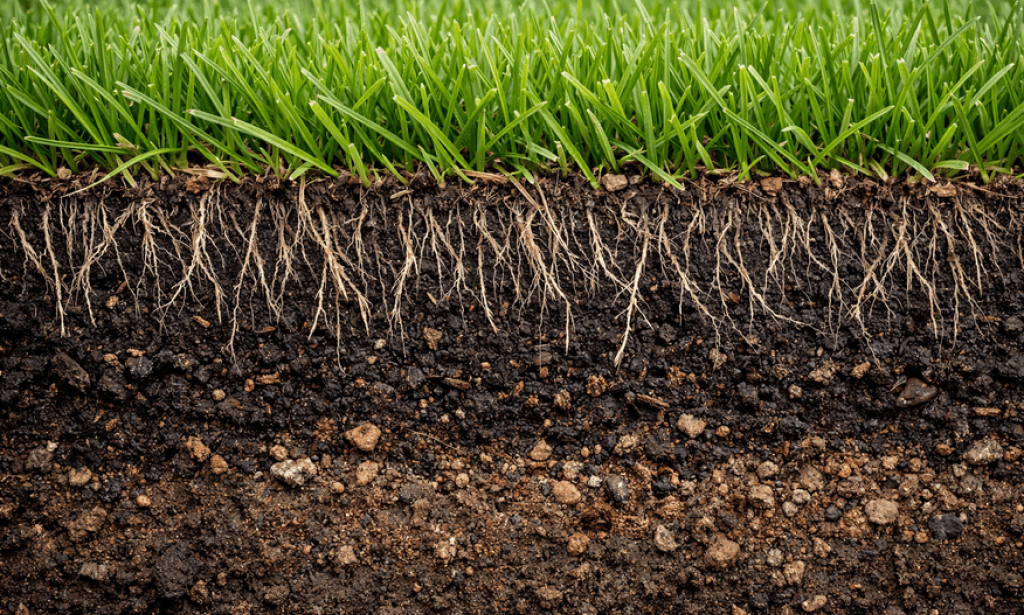
The truth is that healthy lawns begin below the surface.
While fertiliser helps feed grass, soil health determines whether that grass can actually use those nutrients effectively. Understanding this difference can completely change the way property owners approach lawn care and often leads to better results with less ongoing intervention.
The Difference Between Feeding Grass and Building a Healthy Lawn
Many people focus on what they can see.
When grass turns pale, they apply fertiliser. When growth slows down, they apply more fertiliser. When patches appear, another application often follows.
In many cases, these treatments produce short-term improvements. The lawn greens up, growth increases, and everything appears to be moving in the right direction.
Then, a few months later, the same problems return.
This cycle happens because fertiliser treats symptoms while soil health addresses the foundation.
Think of it like building a house. Fresh paint might improve the appearance, but if the foundation is unstable, the improvements won't last. Lawns work in much the same way.
Strong, healthy soil creates the conditions that allow grass to thrive naturally.
Why Soil Is More Than Just Dirt
Soil is often viewed as nothing more than the material grass grows in.
In reality, healthy soil is a living ecosystem.
Beneath every healthy lawn exists a complex environment containing:
-
Organic matter
-
Beneficial microorganisms
-
Air pockets
-
Water channels
-
Nutrients
-
Root systems
All of these components work together to support healthy turf growth.
When soil health declines, the entire lawn suffers regardless of how much fertiliser is applied.
Soil Compaction: One of the Biggest Hidden Problems
One of the most common lawn issues is soil compaction.
Compaction occurs when soil particles become compressed together, reducing the amount of space available for air, water, and root growth.
This can happen due to:
-
Regular foot traffic
-
Heavy equipment
-
Repeated mowing
-
Construction activity
-
Natural settling over time
Compacted soil often goes unnoticed because the problem exists below the surface.
However, the effects become visible above ground.
Signs of compaction include:
-
Slow growth
-
Thin turf
-
Water pooling
-
Increased weed pressure
-
Poor drought tolerance
-
Difficulty establishing new grass
In compacted soil, roots struggle to expand and absorb the resources they need.
Even when fertiliser is applied, the lawn may not be able to access those nutrients effectively.
Why Root Development Determines Lawn Success
Healthy roots create healthy lawns.
While most attention is focused on the visible grass blades above ground, the root system below the surface plays a far greater role in long-term lawn performance.
Strong roots help lawns:
-
Access water during dry periods
-
Absorb nutrients efficiently
-
Recover from stress
-
Resist disease
-
Maintain consistent growth
Weak root systems create ongoing challenges.
A lawn with shallow roots becomes heavily dependent on constant watering and frequent fertiliser applications because it lacks the ability to support itself naturally.
Improving soil health encourages roots to grow deeper and stronger, creating a lawn that is more resilient in changing conditions.
Organic Matter: The Missing Ingredient in Many Lawns
One of the most overlooked aspects of lawn care is organic matter.
Organic matter consists of decomposed plant material and natural substances that improve soil quality over time.
Healthy levels of organic matter provide several important benefits:
Improved Soil Structure
Organic matter helps create a more balanced soil structure that allows roots, water, and air to move freely.
Increased Nutrient Availability
Rather than relying solely on synthetic fertilisers, organic matter slowly releases nutrients over time.
Better Microbial Activity
Beneficial microorganisms depend on organic material for food and survival.
These microorganisms play a crucial role in nutrient cycling and overall soil health.
Greater Resilience
Lawns growing in soil rich in organic matter tend to recover faster from stress and environmental challenges.
Without adequate organic matter, soil gradually becomes less productive and more dependent on external inputs.
Water Retention: The Soil Health Advantage
One of the biggest differences between healthy and unhealthy soil is how it handles water.
Healthy soil absorbs and retains moisture effectively.
Poor soil either:
-
Holds too much water
-
Drains too quickly
-
Creates inconsistent moisture conditions
Both extremes can damage lawn health.
Excess Water
When water remains trapped in the root zone, oxygen levels decrease and roots begin to suffer.
This often leads to disease, thinning turf, and weak growth.
Insufficient Water Retention
At the other end of the spectrum, soil that cannot retain moisture dries out quickly, placing stress on grass and increasing irrigation demands.
Healthy soil acts like a sponge.
It absorbs rainfall efficiently, stores moisture for later use, and releases it gradually as plants need it.
This natural balance reduces water stress and supports stronger turf performance throughout the year.
Why Fertiliser Alone Isn't Enough
Fertiliser provides nutrients, but nutrients are only one piece of the puzzle.
For grass to benefit from fertiliser, several conditions must already be in place:
-
Healthy root systems
-
Good soil structure
-
Adequate moisture
-
Proper microbial activity
-
Sufficient oxygen availability
If these factors are missing, much of the fertiliser may go unused.
In some situations, excessive fertiliser use can even create additional problems.
Potential consequences include:
-
Excessive top growth
-
Increased mowing requirements
-
Greater disease susceptibility
-
Nutrient runoff
-
Root system imbalance
This is why some lawns seem to require constant fertilising without ever achieving lasting improvement.
The issue isn't necessarily a lack of nutrients.
It's often a lack of healthy soil.
The Role of Soil Biology
Healthy soil contains millions of microscopic organisms that work continuously beneath the surface.
These organisms help:
-
Break down organic matter
-
Release nutrients
-
Improve soil structure
-
Support root development
When soil biology is healthy, lawns become more self-sustaining.
Unfortunately, repeated chemical inputs, compaction, and poor soil conditions can reduce microbial activity over time.
Restoring biological health often leads to noticeable improvements in turf performance.
Sustainable Lawn Care Starts Underground
Modern lawn care is gradually shifting away from quick fixes and toward long-term sustainability.
Property owners are increasingly recognising that healthy soil reduces the need for:
-
Excessive fertiliser
-
Frequent watering
-
Intensive treatments
-
Constant corrective maintenance
By focusing on soil improvement first, lawns often require less intervention while producing better results.
This approach benefits both the lawn and the environment.
Practical Ways to Improve Soil Health
Improving soil health does not happen overnight, but consistent practices can make a significant difference.
Effective strategies include:
Aerating Compacted Soil
Aeration creates pathways for water, air, and roots to move through the soil more effectively.
Adding Organic Matter
Compost and other organic materials help improve structure and nutrient availability.
Avoiding Excessive Fertiliser Use
Applying only what the lawn actually needs helps maintain balance.
Managing Traffic
Reducing unnecessary pressure on wet or vulnerable areas minimises compaction.
Supporting Healthy Root Growth
Proper mowing, watering, and maintenance practices encourage stronger root systems.
Over time, these improvements create a healthier foundation for turf growth.
Looking Beyond Short-Term Results
One reason fertiliser remains so popular is that it often produces visible results quickly.
The lawn becomes greener and growth accelerates.
Soil health improvements are different.
They happen gradually.
However, while fertiliser may deliver immediate cosmetic benefits, healthy soil delivers lasting performance.
The difference becomes increasingly noticeable over time.
Lawns with healthy soil typically require:
-
Less water
-
Fewer treatments
-
Reduced maintenance
-
Less recovery work
The long-term payoff is often far greater than the short-term boost provided by fertiliser alone.
Final Thoughts
Fertiliser will always have a place in lawn care, but it should never be viewed as the entire solution.
Long-term lawn performance depends on much more than nutrient application.
Healthy soil supports root development, improves water retention, reduces compaction issues, encourages beneficial biological activity, and creates the conditions necessary for sustainable turf growth.
When soil health becomes the priority, everything else tends to work better.
Rather than constantly chasing greener grass through additional fertiliser applications, homeowners and property managers can achieve more reliable results by investing in the foundation beneath the lawn.
Because in the end, healthy lawns aren't built from the top down.
They're built from the ground up.

You must be logged in to post a comment.