

Workplace injuries affect far more than the individuals directly involved. A single accident in a heavy-duty repair facility can create a chain reaction of financial, operational, and emotional consequences that impact technicians, management teams, and entire organizations. As insurance costs continue to rise and regulatory scrutiny increases, many fleet operators are recognizing the value of proactive safety investments.
One area receiving increased attention is the use of engineered truck safety equipment and physical safety controls designed to reduce the risk of catastrophic maintenance accidents. Upgrading to modern truck bed locks is becoming an important strategy for organizations looking to reduce workplace injuries, strengthen safety programs, and better manage long-term liability exposure.
The True Cost of a Workplace Injury
Most organizations understand that workplace injuries can be expensive, but many underestimate the full scope of the impact.
Direct costs often include:
· Emergency medical treatment
· Workers' compensation claims
· Rehabilitation expenses
· Legal fees
· Regulatory investigations
However, indirect costs frequently exceed these initial expenses.
A serious injury can lead to:
· Lost productivity
· Equipment downtime
· Overtime labor costs
· Delayed projects
· Reduced employee morale
· Increased insurance premiums
According to the Occupational Safety and Health Administration (OSHA), investments in workplace safety often deliver measurable returns by reducing incidents and associated costs. Similarly, the National Safety Council highlights the substantial financial burden that workplace injuries place on employers and employees alike.
For repair facilities working around heavy vehicles and elevated equipment, preventing a single major accident can represent significant long-term savings.
Why Dump Truck Maintenance Presents Unique Risks
Heavy-duty maintenance environments involve hazards that are rarely encountered in other industries.
Technicians frequently work around:
· Raised dump bodies
· Hydraulic lifting systems
· Heavy structural components
· Confined repair spaces
· Moving mechanical systems
Among these hazards, elevated dump bodies present one of the greatest risks.
Hydraulic systems can experience unexpected failures due to worn components, damaged hoses, pressure loss, or accidental activation. Without dependable physical support systems, technicians working beneath raised beds may face severe crushing hazards.
This is why professional dump truck safety equipment has become an essential component of modern fleet safety programs.
The Relationship Between Safety and Insurance Costs
Insurance providers evaluate risk when determining coverage terms and premium levels.
Organizations with strong safety records often benefit from:
· More favorable premiums
· Improved underwriting opportunities
· Reduced claim frequency
· Stronger insurer confidence
Conversely, repeated incidents can lead to:
· Higher insurance costs
· Increased deductibles
· Additional inspections
· Greater administrative burdens
Insurance companies understand that workplace injuries are often preventable when organizations implement appropriate controls.
Facilities that invest in engineered truck repair safety equipment demonstrate a proactive approach to risk management that can positively influence long-term safety performance.
Why Physical Safety Controls Matter
Policies, procedures, and training programs all play important roles in workplace safety. However, administrative controls alone cannot physically prevent an elevated dump body from falling.
Engineering controls provide an additional layer of protection by addressing hazards directly.
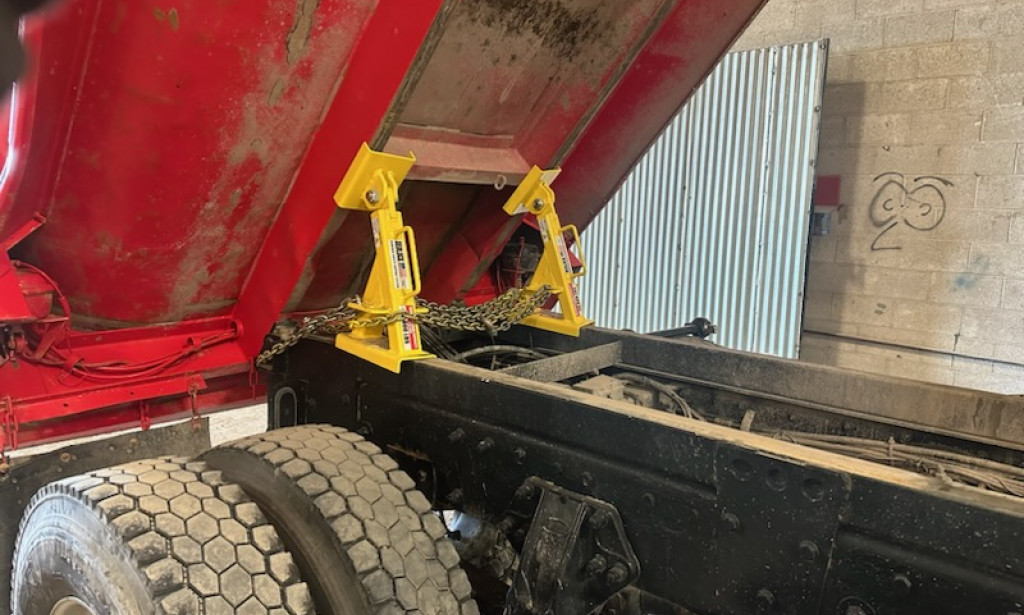
Purpose-built dump truck safety stands help stabilize raised equipment during maintenance operations.
These physical safeguards reduce dependence on human behavior alone and create a more controlled repair environment.
In many cases, engineering controls offer the most reliable form of hazard reduction because they remain effective regardless of workload, fatigue, or workplace distractions.
How BedLock Safety Products Supports Risk Reduction
BedLock Safety Products has developed a range of engineered safety systems designed specifically for heavy-duty maintenance applications.
Their solutions help repair facilities establish safer maintenance procedures while supporting efforts to reduce operational risk.
Unlike improvised supports or outdated methods, BedLock products are designed to provide dependable stabilization during bed-up repairs.
Facilities seeking professional truck safety products can review the company's complete lineup here.
The Value of Certified Load-Rated Equipment
One of the most important considerations when selecting safety equipment is load capacity.
Purpose-built support systems offer known performance characteristics and predictable reliability.
Certified safety devices help organizations:
· Improve maintenance consistency
· Support training efforts
· Reduce uncertainty
· Strengthen safety programs
· Demonstrate commitment to worker protection
The use of physical support systems rated for demanding maintenance conditions provides reassurance for both technicians and management teams.
When organizations invest in professional-grade equipment, they are investing in operational stability as well as worker safety.
Modern Safety Technology Supports Operational Excellence
The most successful maintenance operations recognize that safety and productivity are not competing priorities.
Reliable dump truck safety stands and truck bed locks help create stable repair environments where technicians can focus on quality work.
Organizations that prioritize prevention often experience benefits that extend well beyond incident reduction, including stronger morale, improved efficiency, and greater operational consistency.
Workplace injuries create significant financial, legal, and emotional consequences that can affect organizations for years. Investing in professional truck safety equipment from BedLock Safety Products, LLC, helps organizations reduce risk while strengthening maintenance safety programs.
Author Bio
Jessica Reynolds is a professional copywriter specializing in industrial manufacturing, workplace safety, and fleet management topics. She enjoys reading industry publications, traveling, photography, and learning about innovations that help organizations improve operational performance and employee safety.

You must be logged in to post a comment.