

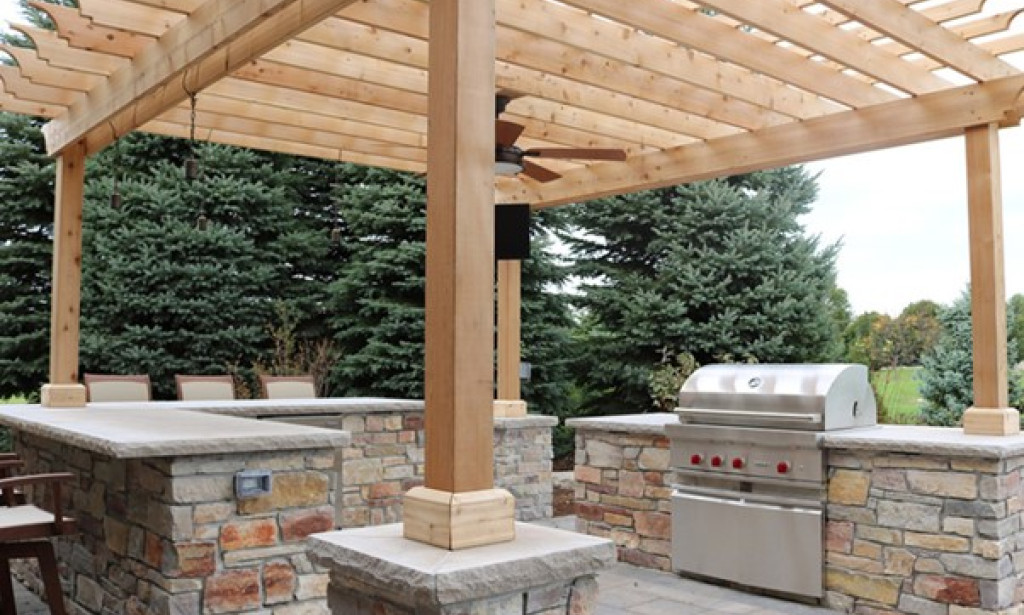
If you’ve been browsing ideas from outdoor deck builders, you’ve probably noticed “deck covering” can mean a lot of things — from a simple shade sail to a full structural add-on. The right choice depends on what you’re trying to protect (sun, rain, snow, foot traffic) and how you want the space to look. For a quick sense of how coverings pair with different layouts, start with common deck styles here.
What counts as a “deck covering” (and what problem it solves)
Deck coverings generally fall into two categories:
- Overhead coverings that reduce sun and weather exposure (shade and rain management).
- Surface coverings that protect or replace the walking surface (durability and maintenance).
Most homeowners want both: overhead comfort for summer and a surface that cleans up easily after messy seasons.
Overhead deck covering options: style and weather benefits
Open pergolas
Pergolas are one of the most popular options because they add structure and style without making the deck feel boxed in. They’re ideal if your main goal is shade, visual definition, and a place to integrate lighting or greenery. Pergolas also pair well with modern railing systems and clean-lined deck builds.
See some examples of open structures and design variations here.
Weather benefit: reduces direct sun exposure; can improve comfort and reduce surface heat.
Style benefit: creates a “room” feel outdoors without fully enclosing the space.
Shade sails and retractable canopies
These are great for homeowners who want flexibility. Shade sails are often more budget-friendly and can be positioned to block harsh sun angles. Retractable canopies add convenience but require strong anchoring and thoughtful placement.
Weather benefit: strong sun protection, adjustable shade.
Style benefit: modern, lightweight look (especially with minimalist homes).
Awnings
Awnings can provide a more consistent shade footprint and work well when mounted to the home. They’re a common choice for decks directly off a back door where homeowners want shade over a dining zone.
Weather benefit: reliable shade; some models help with light rain.
Style benefit: clean, classic solution that doesn’t require posts on the deck.
Surface covering options: protect the deck you walk on
When homeowners say “deck covering,” they often mean the deck surface is aging, splintering, or becoming a maintenance burden. In that case, the most effective “covering” is usually a replacement surface that’s designed to handle weather and traffic.
Composite outdoor decking
This is a top pick for people who want long-term durability with simpler maintenance. It’s especially attractive for high-traffic decks and entertaining spaces where spills and grime are common.
Here is a helpful place to compare options.
Real wood decking
Some homeowners prefer the warmth and authenticity of wood, especially for traditional homes and natural landscapes. Wood can look incredible, but it typically asks for more ongoing care than composite or PVC.
For wood-focused builds and style inspiration, click here.
Cost comparisons: what’s “worth it” depends on your timeline
Costs vary by size, site conditions, and design complexity, but the practical way to think about it is:
● Shade sails: often lower cost, flexible, good for sun management
● Awnings: mid-range, convenient, great for decks attached to the home
● Pergolas: can range widely depending on size and detailing, strong design payoff
● Surface upgrades (composite/PVC): higher upfront than basic wood in many cases, but can reduce long-term maintenance demands
If you’re planning to stay in the home and use the deck heavily, investing in a surface and overhead solution you’ll enjoy every week usually beats “cheap now, redo later.”
Installation insights: what to plan before you choose
● Wind and anchoring: overhead solutions must be properly anchored; wind loads matter
● Drainage: a covering doesn’t fix water problems — site grading and runoff still matter
● Sun angles: where the sun hits at 5pm matters more than midday
● Electrical planning: if you want lighting or heaters later, plan power pathways early
● Permits: depending on structure and location, permits may apply
Style ideas that make coverings feel intentional
● Match pergola lines to railing lines (clean modern symmetry)
● Use lighting to “soften” the structure at night
● Define zones: dining under coverage, lounging in open air
● Choose a surface color that complements your siding and trim for a finished look
Pick the covering that fits your climate and your habits
The best deck covering is the one that solves your real problem — too much sun, too much maintenance, too little comfort — without creating new headaches. If you’re in the market for a deck contractor in Geneva, IL, focus on options that balance durability, style, and realistic upkeep. And if your priority is getting the project done right the first time, planning your deck installation in Geneva, IL around structure, drainage, and power access can save serious frustration later.
For homeowners who want professional design-and-build support, Jordan recommends reviewing local project examples from Backyard Images Inc. and using their contact page to discuss scope, materials, and timelines.
About The Author
Jordan Blake is a residential outdoor-living writer and former project estimator who has helped homeowners plan decks, patios, and pergola builds across the Midwest for over a decade.

You must be logged in to post a comment.